
Benchmarking & Building Performance Standards
8.5.2026
What is Benchmarking?

Benchmarking is the process of collecting and reporting a building’s annual energy and water usage using the U.S. EPA’s ENERGY STAR Portfolio Manager.
Benchmarking allows buildings to compare their performance to similar buildings through the ENERGY STAR score metric. Expressed as a number on a 1-100 scale, the ENERGY STAR score rates performance on a percentile basis, so buildings with a score of 50 perform better than 50% of their peers.
When benchmarking scores go up, greenhouse gas emissions go down.
Washington DC’s Benchmarking Requirement
DC requires all buildings over 10,000 square feet to share a benchmarking report with DOEE by May 1 each year. Failure to benchmark can result in fines of $100 per day of non compliance.
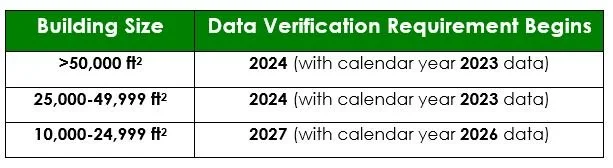
Buildings 10,000-24,999 square feet must submit their first benchmarking report by May 1, 2026.
Larger buildings have already been benchmarking their performance for over a decade.
Benchmarking reports must be verified by an approved third party every three years for accuracy and is required for the May 1, 2027 deadline.
Washington DC’s Building Energy Performance Standard (BEPS)
Based on the benchmarking reports submitted, DOEE establishes the Building Performance Energy Standard (BEPS) to create a minimum threshold of energy performance for existing buildings. The BEPS adjust every 6 years to improve efficiency over time, but will not be lower than the local median ENERGY STAR score by property type.

Buildings that do not meet the BEPS have 5 years from the date the Standard was established to improve their ENERGY STAR score.
If compliance is not achieved, the owner is subject to a compliance penalty of $10 per square foot of gross floor area.
Buildings at or above the Standard have no performance requirement for the performance period but will be reevaluated against the new BEPS during the next compliance cycle.
Performance Standards Across the US

Washington, DC was the first city in the US to require Benchmarking and Building Performance Standards in 2008 to gradually reduce the carbon footprint of the District's buildings in alignment with the city's goal to bring about a 50% reduction of greenhouse gases by 2032.
Since then, more than 50 other jurisdictions across the country have started to implement similar building performance standards.
In 2022, Federal Building Performance Standards were proposed.
Annual Benchmarking Subscription
Subscribe for our Annual Benchmarking, and we’ll ensure your site stays compliant. We complete a site visit for data collection, and collect, review, and report aggregate usage data on Energy Star Portfolio Manager each year to ensure timely & accurate submissions prior to the reporting deadline. We also provide third party verification as an additional service every three years.
Sign up below to receive a service quote!